
PhD Position in Fluid Dynamics & PINO - Deep-Tech Startup
Horizon Europe-funded DeepTech PhD: at the heart of a CEA/CNRS startup, invent tomorrow’s AI tools to reveal the invisible in industrial flows. Science, impact, French Riviera...

Physics-Informed Neural Operators (PINO) for Ultra-Fast Tomography: Toward Fundamental and Generalizable AI for Industrial Fluid Mechanics
Reference number: COMBINE-DC09 (fluiidd, France)
RESEARCH FIELD
Engineering, Artificial Intelligence, Computational Physics
RESEARCHER PROFILE
Doctoral Researcher / PhD student
APPLICATION DEADLINE
30/04/2026
LOCATION
fluiidd, La Ciotat, France (with mandatory secondments at academic and industrial partners across Europe)
TYPE OF CONTRACT
Temporary
JOB STATUS
Full-time
OFFER STARTING DATE
01/09/2026
EU RESEARCH FRAMEWORK PROGRAMME
Horizon Europe Marie Skłodowska-Curie Actions
MARIE CURIE GRANT AGREEMENT NUMBER
101227547
About COMBINE
This PhD position is part of the Marie Skłodowska-Curie Doctoral Training Network COMBINE – Coupled Problems for Decarbonization in Industry and Power Generation, which brings together 17 leading academic institutions and 14 industrial partners across Europe. COMBINE addresses fundamental challenges in fluid–structure interaction, advanced numerical modelling, experimental techniques, sensor development, data-driven methods, and artificial intelligence for industrial applications in energy, process, and materials engineering.
Doctoral researchers in COMBINE benefit from a highly international, interdisciplinary, and inter-sectoral training environment, including:
• Joint supervision by internationally renowned academic and industrial leaders
• Network-wide scientific and transferable skills training
• Mandatory secondments at academic and industrial partners
• Excellent working conditions and competitive MSCA funding
More information about the network: https://euraxess.ec.europa.eu/jobs/401249
Host Institution
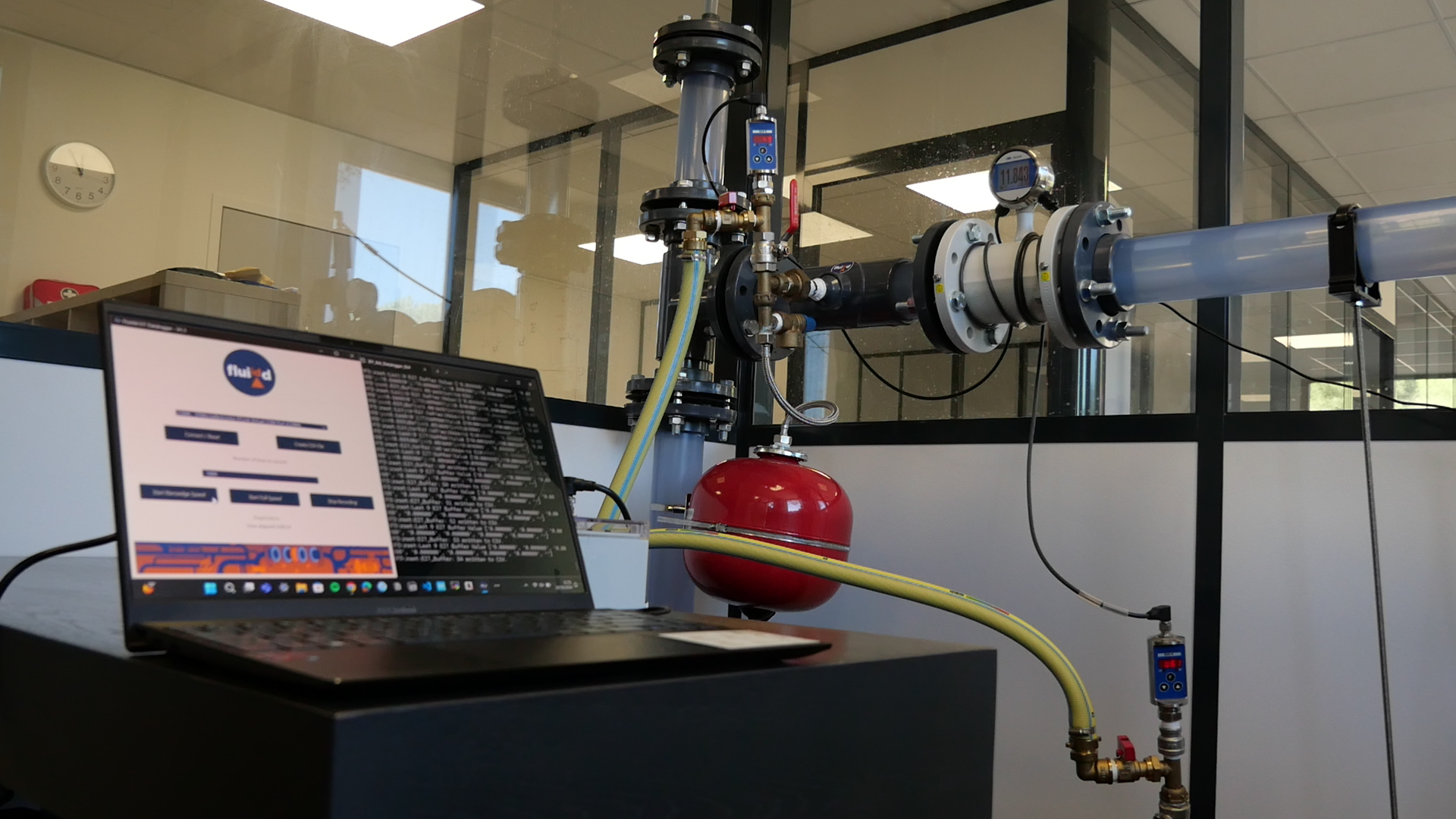
fluiidd is a deep-tech startup and CEA spin-off developing next-generation multiphysics tomography sensors for real-time monitoring of industrial flows. By embedding AI directly into sensing hardware, fluiidd enables industries to “see” inside opaque systems and predict failures before they occur: a key enabler for safer, more efficient, and lower-carbon industrial operations.
The PhD will be conducted at fluiidd (La Ciotat, France) in close collaboration with CEA and CNRS, and fully integrated into the COMBINE Doctoral Network.
1. Context and Challenges
Title: Physics-Informed Neural Operators (PINO) for Ultra-Fast Tomography: Toward Fundamental and Generalizable AI for Industrial Fluid Mechanics
Industrial tomography generates high-frequency electrical and vibrational signals that encode the dynamics of complex fluid–structure interactions. However, current AI-based approaches remain largely empirical, system-specific, and poorly grounded in physics, limiting their robustness, interpretability, and generalization across industrial configurations.
The objective of this PhD is to develop physics-informed neural operator frameworks that embed governing equations and invariants of fluid mechanics directly into learning architectures, enabling real-time, generalizable, and physically consistent reconstruction and forecasting of multiphase industrial flows from indirect measurements such as Electrical Impedance Tomography (EIT) and accelerometry.
This project aims to establish a new class of fundamental, operator-learning-based inverse models that bridge sensing, physics, and AI, forming the algorithmic core of next-generation industrial instrumentation.
For this mission, you will join an agile team composed of:
• A PhD student in AI/Control: focused on anomaly detection in time series.
• An MLOps Engineer: responsible for deployment and production of models.
• An Embedded Software Engineer: ensuring high-frequency data acquisition.
Your role: Be the team’s “physical brain.” You will turn raw electrical and vibrational signals into invariant physical quantities.
2. Scientific Missions and Objectives
The doctoral researcher will focus on the inverse problem of reconstructing solid motion and flow states from distributed sensor data, with emphasis on physics-informed learning and generalization across geometries and operating regimes.
Key research directions include:
• Physics-Informed Neural Operators (PINO):
Design operator-learning architectures embedding Navier–Stokes equations, fluid–structure coupling laws, and electromagnetic forward models to map sensor fields to flow and solid dynamics.
• State Observer Development:
Infer object position, vibration modes, and dynamic loads from EIT and accelerometry signals under turbulent, cavitating, or multiphase flow conditions.
• Dimensionless and Invariant Representations:
Transform raw signals into physically meaningful invariants (e.g., Reynolds number, void fraction, cavitation index) to enable cross-system generalization and scalable AI diagnostics.
• Experimental and Phenomenological Validation:
Design and exploit experimental campaigns in collaboration with CEA and academic COMBINE partners to validate learned operators against controlled benchmarks and real industrial data.
• Deployment in Embedded AI Systems:
Contribute to real-time, edge-deployed AI pipelines within a startup environment, closing the loop between theory, experiments, and industrial deployment.
3. Training Environment and Secondments
The PhD candidate will benefit from the full Marie Skłodowska-Curie Doctoral Network training programme, including:
• Joint academic–industrial supervision by fluiidd, CEA, and CNRS
• Network-wide scientific schools, workshops, and transferable skills training
• Mandatory secondments at academic and industrial COMBINE partners across Europe, enabling exposure to complementary expertise in computational physics, experimental fluid mechanics, and industrial sensing
• Access to world-class experimental facilities, HPC resources, and industrial-grade datasets
This inter-sectoral training is designed to produce researchers capable of bridging fundamental science, AI, and industrial innovation.
Academic supervision:
• Guillaume Ricciardi (PhD, HDR), CEA
• Cédric Bellis (PhD, HDR), CNRS
Industrial supervision:
• Mathieu Darnajou (PhD), CEO, fluiidd
4. Candidate Profile
We seek an outstanding and highly motivated candidate with strong interest in physics-informed AI, inverse problems, and industrial sensing.
Required technical skills:
• Education: Master’s degree in Physics, Applied Mathematics, Engineering, or a closely related field
• Physics: Solid background in fluid mechanics, electromagnetism, and/or multiphysics modelling
• Mathematics & AI: Numerical analysis, inverse problems, neural networks, scientific machine learning
• Programming: Python (scientific computing, ML), preferably C++
• Languages: Excellent English (working language of COMBINE); French is a plus
5. Eligibility Criteria (Mandatory MSCA Rules)
Applicants must fulfill all Marie Skłodowska-Curie Doctoral Network eligibility conditions:
• Doctoral status: Must be in the first four years of research career and not yet hold a PhD
• Mobility rule: Must not have resided or carried out their main activity (work, studies, etc.) in France for more than 12 months in the 36 months prior to recruitment (01/09/2026)
• Any nationality is eligible
6. Conditions and Benefits
This position offers outstanding research conditions within the French Deep Tech ecosystem:
• Competitive salary according to MSCA scales (Living Allowance + Mobility Allowance + Family Allowance if applicable)
• Excellent research conditions within a fast-growing deep-tech startup and leading European research institutions
• Strong industrial exposure and international mobility through mandatory secondments
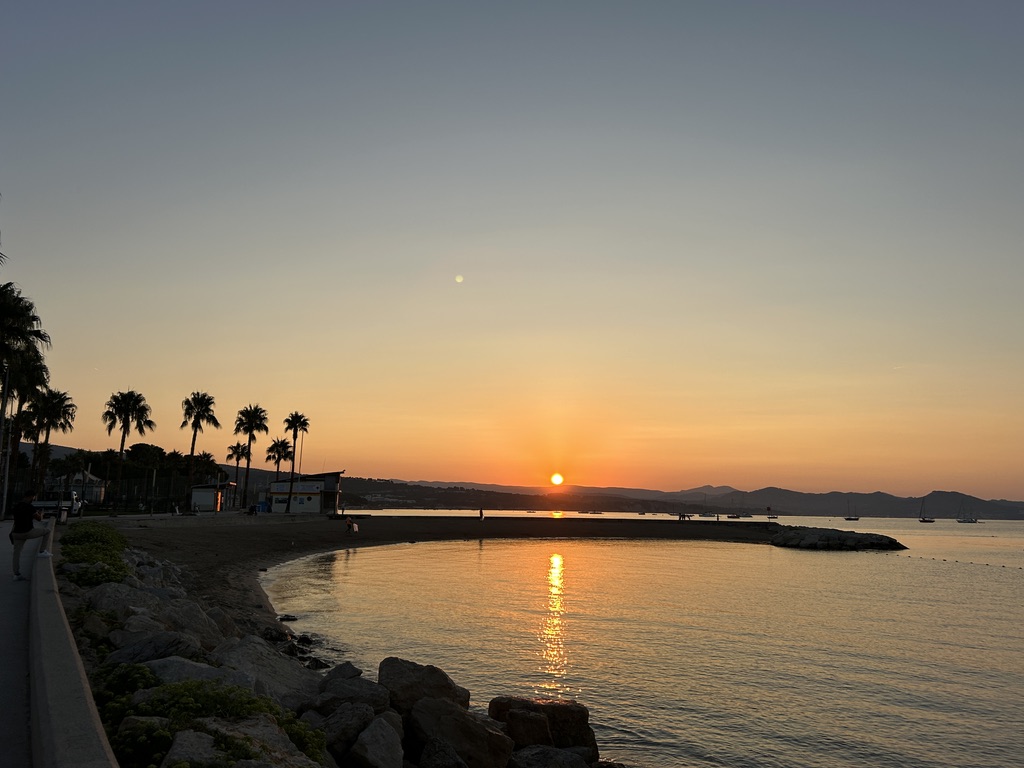
• Living and working in La Ciotat (France), between Marseille and the Mediterranean Sea on the French Riviera.
Why apply?
You will not only write a PhD thesis, you will help build the scientific and algorithmic core of a deep-tech startup transforming industrial sensing and decarbonization. This project places you at the frontier of physics-informed AI, inverse problems, and real-world deployment, while benefiting from the prestige, training excellence, and international mobility of a Marie Skłodowska-Curie Doctoral Network.
More info:
- Department
- R&D
- Locations
- Bureau La Ciotat
